Pracaxi
Oil
An Amazonian botanical oil valued for its distinctive fatty acid profile and its potential in hair care, skin care and specialty cosmetic formulations.
Request Product Information →Discover the potential of a distinctive Amazonian oil
Pracaxi oil is obtained from the seeds of Pentaclethra macroloba, a tree associated with the Amazonian region. Its fatty acid composition, including behenic acid, has attracted interest in cosmetic ingredient research and the development of personal care products.
A botanical oil with a remarkable composition
Published literature has reported a behenic acid content of approximately 19% in pracaxi oil. Behenic acid is a long-chain fatty acid that contributes to the distinctive composition of this botanical oil.
Pracaxi oil has been investigated for cosmetic applications, particularly in hair care and makeup formulations, where emollient properties and the sensory characteristics of the finished product are important.
The composition and performance of commercial material depend on seed origin, extraction method, processing and storage conditions.
Fatty Acid Profile
Research has characterized pracaxi oil for its fatty acid composition, including behenic acid.
Cosmetic Potential
An ingredient of interest for evaluating emollient properties in personal care formulations.
Amazonian Origin
Obtained from seeds of a tree associated with seasonally flooded Amazonian environments.
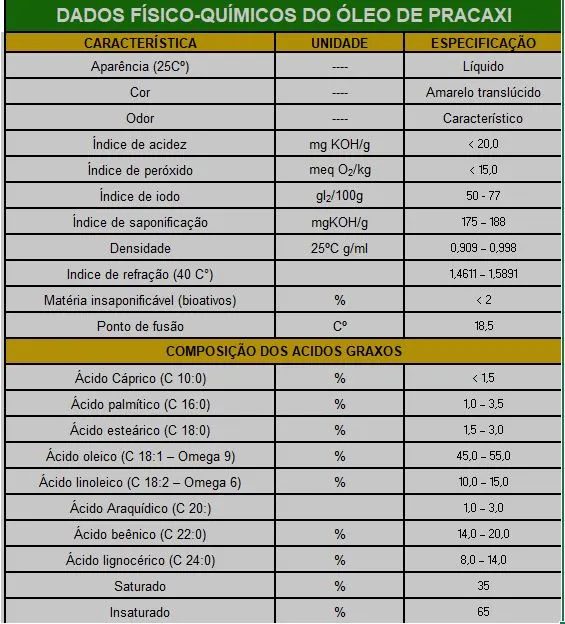
Physicochemical data
The figures below summarize information reported in the supplied literature. They are not guaranteed specifications for every commercial grade of pracaxi oil.
| Common Name | Pracaxi Oil |
|---|---|
| Botanical Name | Pentaclethra macroloba |
| Material Type | Vegetable oil obtained from seeds |
| Key Fatty Acid of Interest | Behenic acid |
| Reported Behenic Acid Content | Approximately 19% in the supplied source material |
| Reported Oil Content in Seeds | Approximately 30% on a dry-weight basis |
| Primary Application Areas | Hair care, skin care, makeup and other cosmetic formulations, subject to product testing |
| Quality Documentation | Request the supplier's current technical data sheet, certificate of analysis and relevant safety documents. |
Technical note: Fatty acid percentages may vary between samples and analytical methods. Confirm the composition of the actual commercial grade through a current certificate of analysis before using these figures in product specifications or marketing claims.
Versatility for personal care development
Pracaxi oil can be evaluated by cosmetic formulators for a range of applications. The final performance depends on the overall formulation, ingredient grade and use conditions.
Hair Care
May be evaluated in hair oils, conditioners, masks and leave-in products designed to improve manageability, shine and the sensory feel of hair.
Skin Care
Can be assessed as an oil-phase ingredient in creams, lotions and emollient blends intended to support skin softness.
Makeup Formulations
A potential ingredient for evaluation in selected makeup products where the properties of the oil phase contribute to texture and application.
Specialty Cosmetic Blends
Can be considered for research and development of botanical oil blends, subject to stability, compatibility and sensory testing.
Formulation guidance: Select the inclusion level through laboratory trials. Assess oxidation stability, compatibility, odor, color, packaging and the requirements applicable to the intended finished product.
Traditional uses and regional practices
Historical accounts describe the artisanal extraction of pracaxi oil through the processing and cooking of dried, pounded seed material. Seeds have traditionally been collected from rivers, beaches and small waterways, then sun-dried and stored for trade.
Ethnobotanical accounts also document traditional uses of the plant's bark and stem, as well as the oil in hair care and skin-related practices in parts of the Amazonian region.
These accounts are important to the cultural history of the ingredient, but traditional use alone does not establish clinical efficacy or safety for a particular treatment.

Understanding pracaxi seasonality
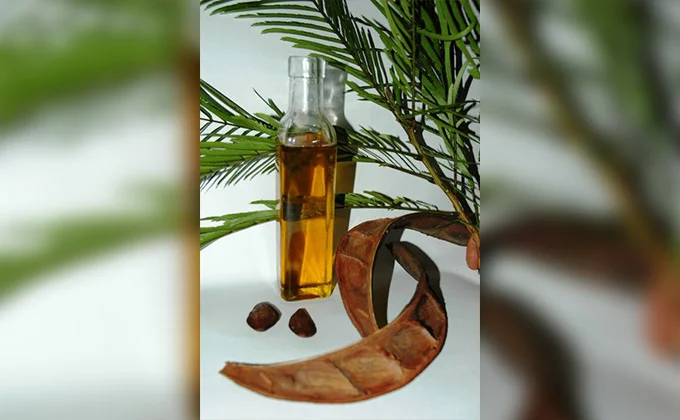
Pracaxi produces curved pods containing several seeds. The seeds are collected and dried before further processing and extraction. Their availability depends on local environmental conditions and collection practices.
For commercial planning, harvest periods, available volumes and delivery schedules should be confirmed directly with the supplier or producing community.
Confirm local harvest availability
The supplied references do not establish a single, verified harvest calendar for all producing areas. Ask for current seasonal availability, traceability information and expected lead times.
A species adapted to Amazonian environments
Pentaclethra macroloba is reported across northern Brazil and other parts of tropical America. The tree is commonly associated with seasonally flooded environments, including Amazonian várzea.
- Tree height: Historical descriptions report approximately 8–14 metres.
- Fruit: Curved pods approximately 20–25 cm long, with around 4–8 seeds.
- Seed oil: The supplied source reports approximately 30% oil on a dry-seed basis.
- Germination: Emergence is reported at approximately 30–40 days under the described cultivation conditions.
- Soil and regeneration: As a leguminous species, pracaxi can contribute to nitrogen fixation and has been discussed for forest regeneration and restoration applications.
Responsible sourcing can support better traceability and consideration of local communities, harvesting practices and the ecosystems where the species grows.
Research beyond cosmetic applications
Published studies have investigated the chemical composition and thermal stability of pracaxi oil. Separate scientific research has examined compounds isolated from the plant, including triterpenoid saponins studied for their interactions with snake venom metalloproteases.
Other research has explored biological activity against mosquito larvae. These findings concern specific experimental materials and conditions; they should not be interpreted as proof that commercial pracaxi oil prevents disease, treats snakebite or functions as an approved medicine or insect repellent.
“Connecting Amazonian botanical resources with the evolving needs of global ingredient buyers.”
GreenSupply AI · Botanical Ingredients
Explore pracaxi oil for your next formulation
Looking for ingredient specifications, sourcing information or commercial availability? Contact GreenSupply AI to discuss your requirements.
Contact GreenSupply AI →References
- COSTA DOS SANTOS, M. N. et al. “Characterization of Pentaclethra macroloba oil, Thermal stability, gas chromatography and Rancimat.” Journal of Thermal Analysis and Calorimetry, vol. 115, issue 3, pp. 2269–2275, 2014.
- LORENZI, H. Árvores Brasileiras. Vol. 2, 2nd edition. Instituto Plantarum, Nova Odessa, SP, 2002, p. 368.
- PESCE, C. Oleaginosas da Amazônia. Belém, PA: Oficinas Gráficas da Revista Veterinária, 1941.
- MORAIS, L. R. Produção de óleo de duas espécies amazônicas por prensagem: Bacuri (Platonia insignis) e Pracaxi (Pentaclethra macroloba). Master's dissertation, Universidade Federal do Pará, 2005.
- SANTIAGO, G. M. P. et al. “Avaliação da atividade larvicida de saponinas triterpênicas isoladas de Pentaclethra macroloba e Cordia piauhiensis sobre Aedes aegypti.” Revista Brasileira de Farmacognosia, vol. 15, no. 3, 2005.
- DA SILVA, J. O. et al. “Triterpenoid saponins, new metalloprotease snake venom inhibitors isolated from Pentaclethra macroloba.” Toxicon, vol. 50, issue 2, pp. 283–291, 2007.
- PCCA. Pracasil Plus — product information for a pracaxi-based scar and wound treatment formulation. Reference URL: https://www.pccarx.com.au/products/pcca-exclusives/bases/pracasil-plus
The information on this page is provided for ingredient education and commercial inquiry purposes. It is not medical advice and does not establish therapeutic claims. Verify technical specifications, safety documentation, product quality and regulatory compliance with the supplier before commercial use.
Let’s build a more sustainable future.
Amazonian ingredients for global brands.