A remarkable
ingredient from
the Amazon.
Cupuaçu Butter · Theobroma grandiflorumDiscover the distinctive properties of cupuaçu butter, a plant-derived ingredient with a rich lipid profile, a soft texture and exciting possibilities for cosmetic and personal care formulations.
From Amazonian seeds to new formulation possibilities.
Cupuaçu butter is obtained from the seeds of Theobroma grandiflorum, a tropical tree native to the Amazon region. While its aromatic pulp is widely enjoyed in foods and beverages, its seeds offer another valuable resource for ingredient development.
With a naturally occurring blend of saturated and unsaturated fatty acids, this botanical butter has attracted interest from formulators looking for plant-based materials for skin care, hair care and other personal care products.
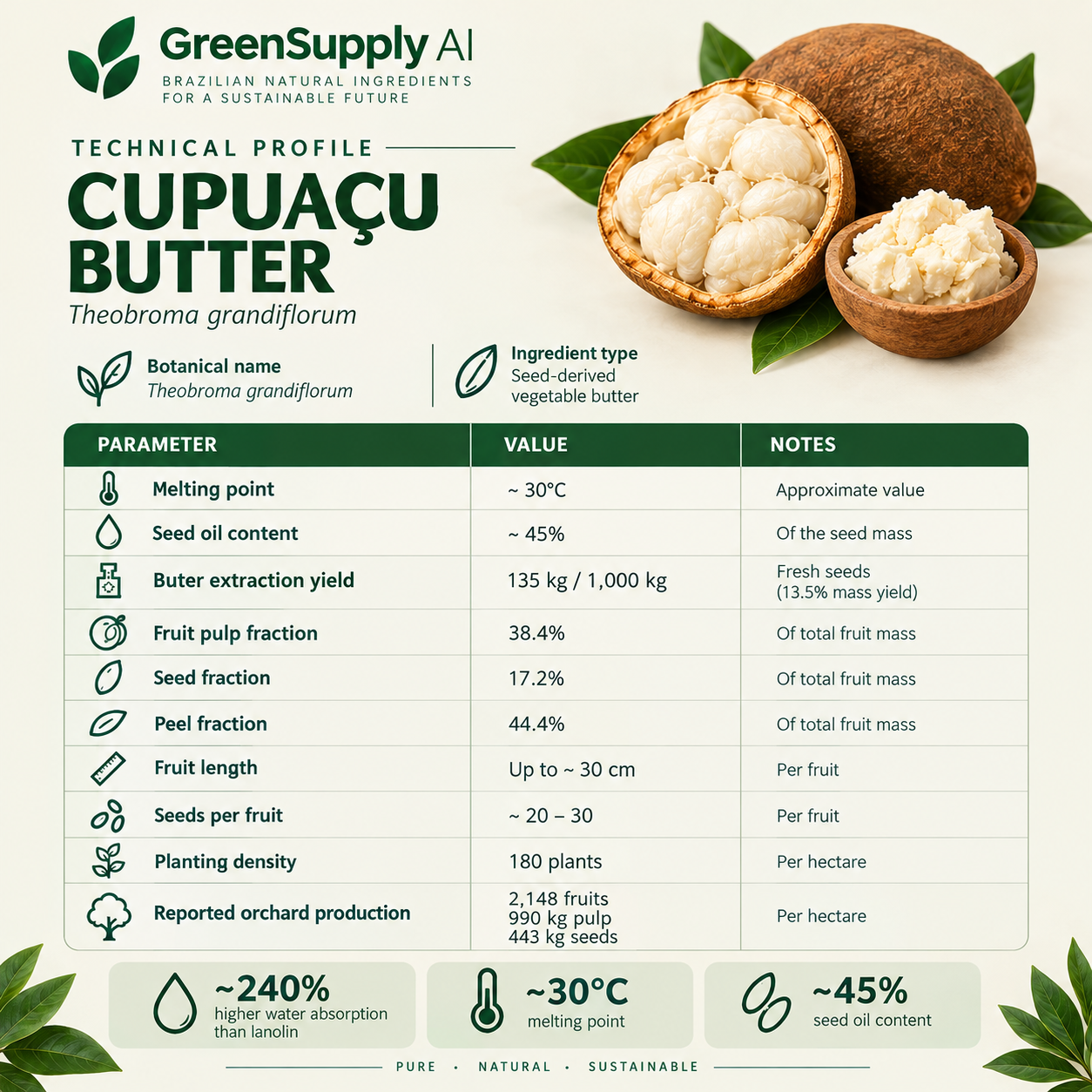
Four numbers worth exploring.
A quick overview of selected physical characteristics and production figures reported in the supplied reference material.
An approximate value reported for the butter's melting point.
Reported as approximately 240% higher than lanolin; test methods should be verified.
Approximate oil content cited for cupuaçu seeds.
135 kg of butter per 1,000 kg of fresh seeds, as reported in the reference.
The fruit, the seeds and the potential yield.
These visual summaries make the reported composition and extraction figures easier to understand at a glance. All percentages are based on the supplied reference material.
Inside a cupuaçu fruit
Reported average distribution by fruit weight.
From fresh seeds to butter
Reported butter output from a 1,000 kg batch of fresh seeds.
How the fruit is distributed
A proportional comparison of the three main fruit components.
The oil-bearing seed
Approximate oil content reported for cupuaçu seeds.
Approximate reported oil content.
From orchard planning to harvested fruit.
The supplied agricultural reference includes the following planting and production estimates. Results can vary with location, tree age, management and environmental conditions.
Reported yield per hectare
Selected cultivation figures
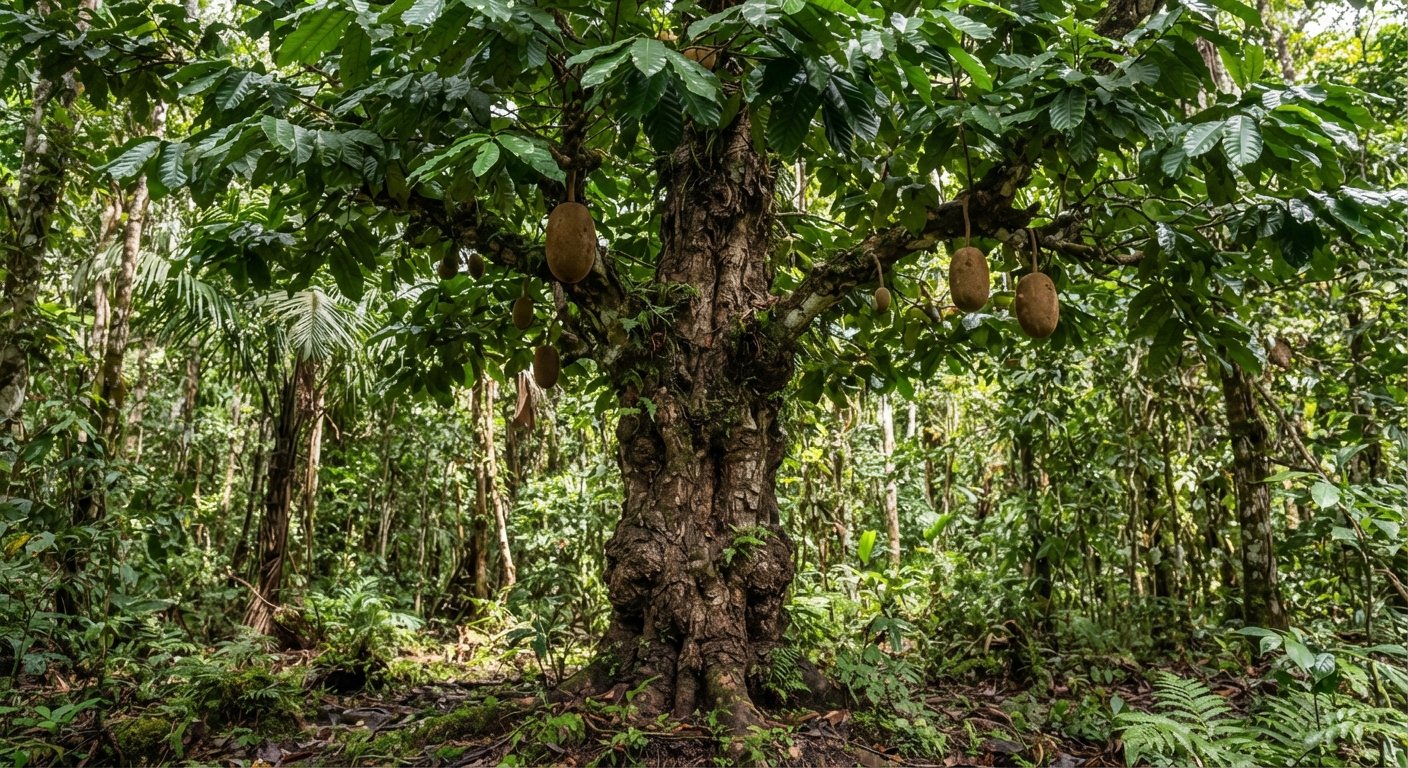
A tropical species with distinctive characteristics.
The cupuaçu tree is native to the Amazon region and belongs to the same botanical family as cacao. Its large fruit contains aromatic pulp and approximately 20–30 seeds, according to the supplied reference.
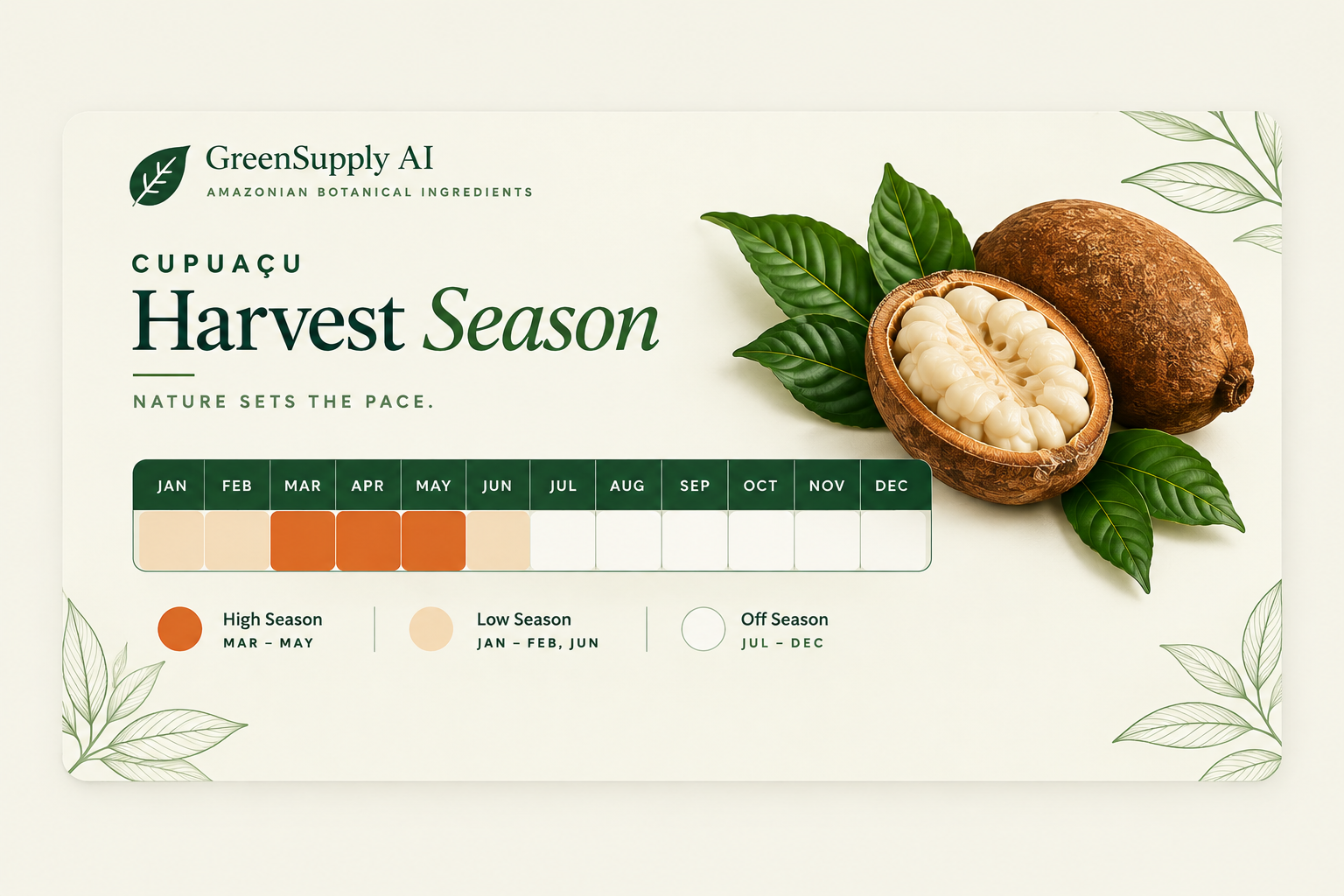
Understanding the season behind the ingredient.
Harvest timing affects fruit collection, seed processing and the planning of raw material availability. Regional climate and cultivation practices can influence the timing and volume of production.
For manufacturers and ingredient buyers, confirming the harvest calendar with the supplier is an important step when planning sourcing and inventory.
One botanical ingredient. Multiple formulation possibilities.
Explore potential uses based on the ingredient's physical and lipid characteristics. Suitability must be established through formulation development and appropriate testing.
Skin Care
Consider for creams, body butters and other formulations where plant-derived emollient ingredients are desired.
Hair Care
Explore in conditioners, masks and selected hair care systems, subject to compatibility and performance testing.
Personal Care
Evaluate for other cosmetic product formats where the butter's texture and formulation properties are appropriate.
Ingredient data at a glance.
Selected values transcribed or calculated from the supplied reference. Confirm specifications with the ingredient supplier before using them for product development or purchasing decisions.
| Parameter | Reported value or description | Notes |
|---|---|---|
| Botanical name | Theobroma grandiflorum | Cupuaçu |
| Ingredient type | Seed-derived vegetable butter | Cosmetic raw material |
| Melting point | Approximately 30°C | Reported approximate value |
| Seed oil content | Approximately 45% | Reference estimate |
| Butter extraction yield | 135 kg per 1,000 kg of fresh seeds | Equivalent to a calculated 13.5% mass yield |
| Fruit pulp fraction | 38.4% | Reported average by fruit weight |
| Fruit seed fraction | 17.2% | Reported average by fruit weight |
| Fruit peel fraction | 44.4% | Reported average by fruit weight |
| Fruit length | Up to approximately 30 cm | Reported maximum |
| Seeds per fruit | Approximately 20–30 | Reference estimate |
| Planting density | 180 plants per hectare | Suggested cultivation figure in the reference |
| Reported orchard production | 2,148 fruits; 990 kg pulp; 443 kg seeds per hectare | Reference estimates; confirm conditions and basis |
Important: these figures are informational and are not a guaranteed product specification. Analytical methods, moisture content, growing conditions and processing parameters can affect the results. Request a current technical data sheet and certificate of analysis from the supplier.
Further reading
The following references were supplied as background material. Verify the bibliographic details and current availability before citing them in technical or regulatory documentation.
- Chlebarov, S. (1990). “Die Kosmetischen Eigenschaften der Phytosterole.” TW Dermatologie. Bibliographic details to be verified.
- Fleck, C.; Newman, M. (2012). “Advanced Skin Care – A Novel Ingredient.” Journal of the American College of Clinical Wound Specialists, 4, 92–94. View the supplied article link.
- Nogueira, A. C. S. et al. “Performance of Cupuassu products in hair and skin care applications.” Skin Care Forum BASF. Citation details to be verified.
- Pesce, C. (1941). Oleaginosas da Amazônia. Belém, Pará, Brazil: Oficinas Gráficas da Revista Veterinária.
- Winkler, A. (1977). “Experimental studies of effect of water content of upper layers of human skin.” Arztliche Kosmetologie, 7, 65–77. Bibliographic details to be verified.
- Yang, H. et al. (2003). “New bioactive polyphenols from Theobroma grandiflorum (‘Cupuacu’).” Journal of Natural Products. Volume, pages and other citation details to be verified.
Bring Amazonian botanical potential into your next formulation.
Looking for cupuaçu butter for your cosmetic or personal care products? Contact our team to discuss ingredient availability, technical specifications and sourcing requirements.
Contact Our Team →